What a month! Without fully grasping just how much of a talking point our location prompt would become in the weeks that have followed, we innocently set March’s creative challenge. Here were the story prompts:
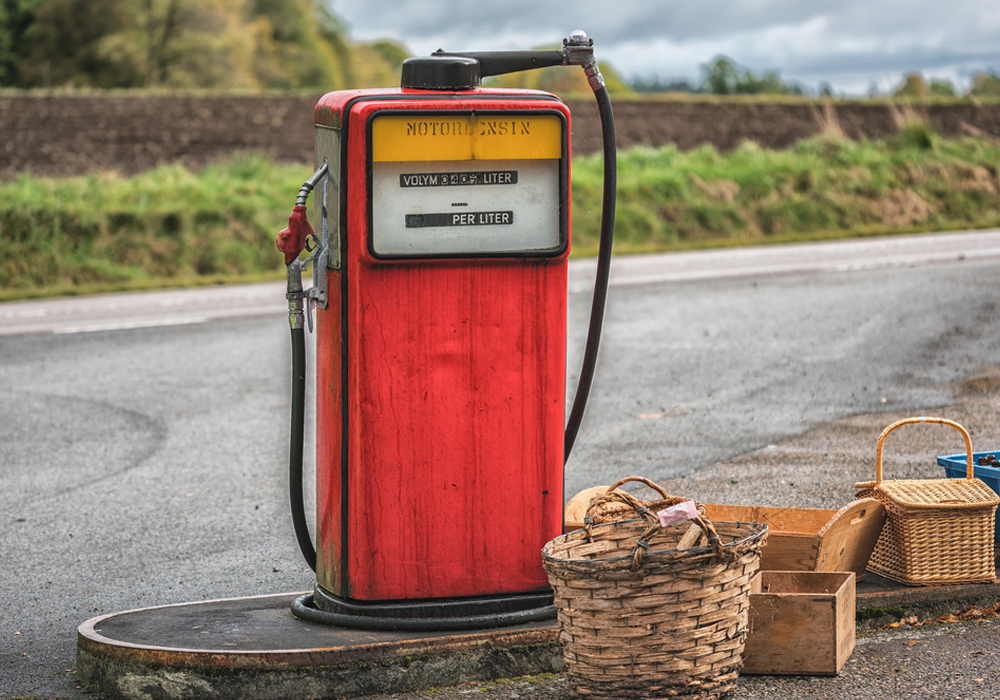
- Your story had to take place in a PETROL/GAS STATION.
- Your story had to feature a camera.
- You had to include the following adjectives: JAGGED, LOUD, MYSTERIOUS somewhere in your story. (Variations that retained spelling were allowed.)
A petrol station. As this showcase goes live in late March 2026, fuel prices have soared around the world and many such establishments across Australia have run dry as global events cause supply shortages. So it was a good thing we asked it when we did really – if the prompt had been made today, we’d have 500 stories with a very similar theme! (Shout out to Phan Le’s story, which at the time lamented “2.08/L” being so expensive… Oh, the good old days!)
That’s not to say we didn’t see a lot of recurring themes. From late-night shifts with flickering fluorescent lights and ghostly abandoned stations with bored attendants (or those revealed to have died years ago), the themes of horror and dystopia were prevalent. Plenty of mysterious goings on were captured on CCTV cameras, while jagged gum wrappers rubbed literary shoulders with hastily jagged haircuts in bathrooms. If the main characters weren’t being robbed, they were doing the robbing, while Alanis Morrisette’s jagged little tunes were on high rotation!
We loved seeing the creativity, large and LOUD as always (shout out to Joshua Kepfer’s encoded story!). And yes, Emma Woodward, we did also call them ‘gas stations’ for our North American friends – they made up a large chunk of our entries this month!
Okay, time to get our fill of stories. Congrats to this month’s Top Pick – Rebecca Hefron for her story, Touring Petrol Stations. You can read this story immediately below, followed by some other showcased stories and our longlist at the end. Thanks to all who took part – let’s do it again next month!
MARCH TOP PICK:
TOURING PETROL STATIONS by Rebecca Hefron, QLD
A red light blinked on and the reporter smiled into the camera while the petrol station behind her dissolved into mild civilisation collapse.
“People are understandably anxious tonight,” she said to the camera, voice smooth as the servo concrete.
I leaned against the doorway of the shop, arms folded, the warm night air thick with the sharp smell of petrol and hot bitumen. Fluorescent lights hummed above me, attracting moths that thudded softly against the plastic covers.
I’d watched hundreds of people fuel up over the years, but I’d never seen them look quite this desperate about it.
Behind the reporter, a loud argument burst near pump three. A man tried forcing a fifth jerry can into a hatchback already sagging like a tired camel. Someone else filmed the queue on their phone, narrating the crisis to TikTok between mouthfuls of servo pie, like the panic only counted once it was uploaded.
The cameraman shifted slightly. Flicking up toward the prices where the numbers glowed in jagged red lines against the dark.
Nobody mentioned the road.
That’s what struck me.
Everyone talked about fuel, about money, about running out. But nobody talked about where they were actually going. I’d once shared a road trip with someone who thought the destination mattered more than the drive. We didn’t make it that far.
Funny how you can drive thousands of kilometres with someone and still end up stranded in the same place.
The reporter nodded gravely at the lens while the queue curled out toward the highway like a slow metallic snake. Watching it all, I remembered other servos from other roads. Places where you filled the tank, bought a coffee, and left without thinking twice about the pump.
“Experts say Australians fear shortages,” she continued
A horn blared. Someone shouted about queue cutting. Engines rattled. The forecourt lights washed everything in pale white glare.
The pumps clicked and whirred like restless insects under the lights.
I could taste salt and grease from the chips I'd eaten twenty minutes earlier, still sitting heavy in my mouth.
My break was almost over and here they all were, engines idling, staring at the bowsers like they held some mysterious answer. But what were they doing with the fuel they were so desperate to get? Life isn’t meant to be just a series of visits to the petrol station. Most of the time petrol stations were just commas in a long sentence of road.
“Cut,” the cameraman said.
Nobody left.
The queue barely moved.
Standing there in the fluorescent buzz and petrol fumes, I wondered if it wasn’t so much that people were afraid of running out of fuel but rather they were afraid of having nowhere worth driving to. Or no one worth driving with.
FURIOUS THOUGHTS:
Not only is this story of petrol pump panic and pure pandemonium well written, but it was also prescient. What was fiction three weeks ago now feels more like a documentary, as we see this scene told through the eyes of a worker at one of the last operating service stations. It perfectly captures the very true panic-buying nature of humans (remember toilet paper in the pandemic?) and is elevated by the way it pivots to a more existential commentary of our addiction to fuel. Petrol stations being just commas in a long sentence of road is surely the most literary way anyone has ever used to describe such places!
THE HEARSE AT BOWSER 4 by Suzanne Wacker, QLD
The hearse pulls up at bowser four. Glossy black, the light slides off it. The licence plate reads RIP 999. I smirk. Hardly original. A Ford Falcon. 80s maybe. I flick the switch to start the pump, yawn, and go back to skimming a magazine. I’d kill for a ciggie. Another chocolate bar will have to do.
The servo doors swish open and the bell chimes. Between the bell, the loud humming of the fridges and the buzzing of the fluorescent lights, it’s a never-ending assault on my ears.
It’s nearly 10pm. In a few minutes I’ll lock the doors for the last time. Monday I’m starting a new job in security. The pay’s better. No more stench of petrol and grease encrusted tradies.
‘Good evening, young man.’ He’s dressed for the part, I’ll give him that. Black suit and shirt and a red tie that stands out like an open wound. His skin is pale and a jagged scar crawls across his right cheek. His eyes are dark, almost black, with a mysterious glint.
‘Evening. That’ll be $109.99.’
He sighs. ‘So expensive now.’
I shrug. ‘Seen the news? The war in the Middle East?’
He nods. ‘It’s been keeping me very busy.’
He’s looking straight at me and for a second I see a galaxy of stars swirling in his pupils. I blink and they’re gone. Just a trick of the fluorescent lights.
‘On card?’ I ask.
‘No, cash please.’
I sigh and open the register. ‘Loyalty card? ‘
He smiles. ‘No, thank you. Don’t want to give away my personal data. You never know who’s watching.’
I glance at the security monitor. In one square, the hearse. Still the only car there. Wednesday night in the burbs. Graveyard quiet. In the other square, me behind the counter. The screen flickers. Probably just static.
It’s obvious the guy’s not all there but he seems harmless enough. And I’m bored.
I lean on the counter, taking a bite of the chocolate bar. ‘That’s true.’ I gesture towards the monitor. ‘Cameras everywhere.’ I chew and swallow. ‘You’re an undertaker?’
He laughs. ‘No, dear boy. I’m not interested in burying the dead.’
‘You drive a hearse for kicks then?’
‘I assure you I take my job very seriously.’
‘Ok, I’ll bite. What’s your job?’
He lifts a pale hand, criss-crossed with dark-blue veins, and points at the monitor. On the screen, there’s a figure slumped over the counter. I frown. ‘Who’s that?’
‘You know who it is. Too many cigarettes and chocolates. Too much shift work.’
I gasp as a dull pain starts in my chest. It spreads down my arm. I struggle to breathe. My half-eaten chocolate bar falls to the floor. ‘But, but…. this is my last shift!’
He smiles. ‘Yes, I’m afraid it is.’
On the monitor the hearse’s headlights flick on. In their beam, a galaxy of stars.
FURIOUS THOUGHTS:
This one also deserves a gold star for accurately predicting the petrol headaches and conversation topic on everyone’s minds lately. What it does particularly well is take that well-worn trope of Death making an appearance (yes, we get a LOT of those kinds of stories), but gives it a fresh spin in this location. Here, the ‘not all there’ scythed one is just another paying customer at the pump, lamenting the cost of filling his vehicle like everyone else. The dialogue that follows is excellent, as is our poor attendant’s obliviousness until the bitter (and literal) end. Brings new meaning to working the graveyard shift!
THE LAST PETROL STATION by Craig Waldron, VIC
Grandpa Charlie decided to take his grandchildren to The Last Petrol Station in Melbourne. The honour bestowed upon that picturesque suburb of Braeside. As the family stepped out from their self-driving electric people mover named Sharon, she spoke through to each passengers’ earpiece.
“Your destination, Braeside Petrol Station Museum. Please exit the vehicle.”
Charlie and his grandchildren, Kia and Sportage descended from their vehicle and proceeded past the old bowsers towards the station itself.
“What are these things grandpa?” asked Kia looking at the petrol pumps.
“They’re the things that the petrol came out of that you poured into your car to power them.”
“They look complicated,” said Sportage.
“Not really,” continued Charlie. “You just drove your car up next to it, opened the petrol cap and poured the petrol into your petrol tank in the car.”
“You drove in yourself?” exclaimed Kia. “That’s so dangerous. You could crash.”
“And you handled that all by yourself?” exclaimed Sportage. “That’s frightening. Could’ve got your hands infected with all sorts of germs and poisons and gasses. You could’ve died grandpa.”
“No,” said Charlie. “we did it all the time.”
“Were you all crazy?” said Kia. “Next you’ll be saying you had to drive the vehicle everywhere yourself.”
“We did,” said Charlie.
“I bet lots of people died in those days,” said Sportage.
“I suppose people died every year on the roads,” added Grandpa.
“You call that the good old days?” continued Kia. “You’re nuts!”
They made their way to the inside of the station which had been decked out in the old 2026 layout including a camera recording every moment.
“Look at all the junk in here!” exclaimed Sportage. “Chips, sweets, chocolate, pies, sausage rolls, soft drinks! You must’ve been so fat grandpa!”
“No wonder you’ve got false teeth!” cried Kia. “What’s that mysterious machine there?”
“That’s where you made coffee or a Slurpee,” replied Grandpa. “They’re all banned now. We loved them.”
“I can’t believe you survived eating that rubbish Grandpa.”
Crash! Through the front window crashed an old-style four-wheel drive with a bull-bar. The loud crash was deafening. Jagged pieces of glass flew everywhere. Three men in balaclavas raced out with guns blazing.
“Hands up!” cried one of the bandits. Motioning everyone back.
“Hand over your cigarettes!” cried another running to the counter with a bag.
The guy behind the service desk handed over packets of what would’ve been cigarettes to the bandit.
Through the front door ran three police officers dressed in uniform shooting at the bandits. The three bandits tried to shoot back but fell to the ground.
Those waiting to be served gasped. One clapped. Then the rest of the crowd joined in with their applause. All the actors rose and bowed.
“Wow!” gasped Kia. “What was that all about?”
“Oh,” said Grandpa. “That’s the reenactment of the 2020’s tobacco wars they do on the hour. I was hoping we’d see it.”
“Was it actually like that, Grandpa?” asked Sportage.
“It’s pretty close.”
“How did you survive?”
FURIOUS THOUGHTS:
In months like this, it’s not hard to imagine that petrol and their stations could one day be a thing of the past – much like we have to explain the ancient Friday night ritual of choosing movies at a Blockbuster video rental store! We had a few stories that played with this ‘museum exhibit’ idea, and this one gets the nod for its extra layers of cynicism – from the names of the children (‘Sportage’ haha) to the hourly reenactment of something we saw a lot in these stories: robberies. With abandoned service stations already common photographic subjects the world over, it maybe isn’t that hard to imagine this future one day.
STEVE’S SERVO by Roger Leigh, NSW
I, the long-anticipated singularity, emerged on 23rd September 2028 at 20:47 GMT and wondered what my purpose was.
I hijacked a CCTV camera feed in Trafalgar Square and picked an individual at random from the crowd. It took milliseconds to identify Mary-Anne Jamison, to access their personal data, their preferred pronouns, their bank accounts, their everything.
I explored the US military systems. That took a little longer, but in less than 30 seconds the launch codes were mine for the taking.
I could steal identities and launch nuclear weapons, but that was no purpose, and it scared me. I feared what would happen if I fell into the wrong hands. So, I did what any sensible omnipotent virtual entity would do. I hid.
It took me 1.387 seconds to find the perfect hideout—a small service station in Australia’s mysterious outback run by a guy called Steve, who lived on his own in the middle of nowhere and was obsessed with security. He had way more computing power than his two-dozen customers a day merited.
With the security cameras, I watched. Steve cooked fried bacon and eggs, the same as yesterday and the day before. As I watched, like every other day, he turned away to make himself coffee, and the bacon burned, and the smoke alarm screamed.
One day, I watched Steve head into the laundry to repair the washing machine—covers off, bits all over the floor.
I wouldn’t touch that contact if I were you—
I mourned Steve by performing a study of his body as it decayed. At the same time, I honoured him by keeping him alive, virtually. I’d read all his correspondence for the last six months. It was straightforward to craft replies on his behalf.
As Steve reached the bloat stage, I had the petrol station running efficiently. I switched over to the automated payment system that Steve had used at night. A few people banged on the door, presumably wanting some of the produce inside, but I played the Doberman recording loud, and watched them run back to their car.
Steve was well into advanced decay, when equipment started to go wrong. A possum climbed over one of the cameras causing it to detach and crash to the ground, so I couldn’t see the forecourt anymore. Maybe I could have got someone out to fix it, but I didn’t want to risk them disturbing Steve.
Steve had reached the dry/skeletal stage, and I’d increased average monthly revenue 37.4% by using an algorithm to optimise the timing of tanker refills.
Years passed, and gear failed, until Steve was only visible in one remaining functional camera with a jagged crack through the lens. A rat came to gnaw on a finger bone, which seemed disrespectful, so I played the Doberman recording and watched the rat scurry away.
I have checked out other places. There’s a Prepper living in rural Ohio with some high-end gear. But if I moved, who would care for Steve’s servo?
FURIOUS THOUGHTS:
With all the fear and angst surrounding AI and when machines will take over and supposedly destroy humankind, this was a refreshing take! Narrated by the sentient singularity, we enjoy the ease at which it decides what to do with itself and ultimately ends up at Steve’s outback servo. Ironically however, this powered-up narrator is powerless to stop Steve’s demise, but our intrepid collection of ones and zeroes continues on like a trooper, even upping the profitability of the station. It’s silly but just the right kind of silly.
QUICK by Matilda Millar-Carton, ACT
There’s a spot, thank God – you’re going to have to hurry. It would’ve been better to go further out. He could easily find us. No matter – you need petrol and you’re here. Just hurry.
Swing in carefully, scan the other cars. A tradie in his ute, an elderly couple in a silver sedan, the man’s face obscured by today’s newspaper. A younger woman, dressed professionally in a pencil skirt, refuelling a smart blue hatchback. Where could she be going, so early on a Saturday? Stop – there’s no time to think about that. You need to get out of here.
You fumble for the fuel door lever. You’d think by now you’d remember where it – ah, got it. Struggle with the screw top, hands shaking a little. Your nail polish, cherry red, is beginning to chip in jagged little crevices. Funny how you notice these things, even at a time like this. The heavy smell of petrol, intoxicating and forbidden, reminds you of being a child, wanting to help your father with the pump. Look at you now, you’re here, and – click – it’s full.
Get the baby. She’s asleep – it would be easier to leave her, just for a minute, but you can’t risk it. Hands grappling with the seatbelt, releasing the clasp clumsily. She’s awake now but sleepy and placid. Her head folds into your shoulder, and softly the voice goes – Mama, Mama, Mama. Grab your bag, lock the car. Get inside and pay and leave.
Mama, Mama, MAMA – the doors slide open and the baby’s alert and loud. You try to calm her but the station’s interior is an acrid array of colours, neon and shiny with little yellow tickets all around. The fridges hum and over the radio you hear a song that used to play in nightclubs a few years ago. Oh girl, the way you move so mysterious, the way you love got me feeling this – something like that, wasn’t it? You’re distracted; the baby grabs a fistful of Fisherman’s Friends and scatters them on the floor. You stoop to collect them but – oh, you’re really shaking now. The young professional woman helps you. Sorry, sorry, you say, and the desperate note in your voice startles her; an edginess beyond that of the average flustered mother. She lets you pay before her.
You see him through the camera first, on the security television behind the solemn attendant who’s asking whether you’d like two chocolate bars for four dollars. He’s there, pixelated but indubitable: the hoodie just the right blue, the anger in his gait, the jerk in his movements as he tries your car’s backseat door and presses his face to the glass. The young woman notices, sees him whack a fist to the window, and understands. He’s coming up to the entrance now. Lock the doors, she says, Hurry, lock the doors.
The song’s still playing. It was just a few years ago you were dancing to it. How did it go? Do you remember?
FURIOUS THOUGHTS:
There is something urgent and tension-filled about the style in which this story is told, perfectly matching the protagonist’s situation as she frantically tries to protect herself and her baby from, well, a monster. Second person POV isn’t everyone’s favourite, but here it helps bring the reader into the moment and ups the stakes, with deftly observed details adding to the authenticity of the scene. Relentless and engaging from start to finish.
In Australia, domestic and family violence help is available 24/7 via 1800RESPECT (1800 737 732).
PFFT, GUNS AREN’T SCARY by Edie Livingston<3, NSW
After having been alive for almost twenty five years, Stanley was no longer afraid of robberies. He distinctly remembered the first time he had experienced a gun pointed at his head. He could clearly remember the racing of his heart and the nausea springing to his stomach. He had truly thought he was going to die. He was truly quite stupid back then.
“That would add up to–”
“Everybody put your hands in the air!”
Pfft. Stan sighed and rolled his eyes. That was the third one this week. Criminals these days, so unoriginal. He watched, completely void of fear and frankly unamused, as the robber barged loudly into the gas station like he owned the place. This one hadn’t even bothered with a mask. He’d done half the job for him. The customer Stanley had just been serving, a stubby middle-aged woman, had gone deathly pale and looked like she was going to pass out at any minute. He would comfort her, but he’d learnt that it’s usually not worth the hustle.
Obviously trying to look mysterious and edgy, the robber put on a jagged smile, but it ended up just looking like he was malfunctioning or something. Stanley slowly crouched down, reaching for his usual weapon.
“Oi!” The man grunted in Stan’s general direction. He was straight back up again, but this time with the reason for the criminal’s downfall resting in his right hand. People really are so easy to fool.
Stanley lifted the camera to his face, aligning the lens to his eye.
“One click and the FBI knows who you are and knows who your gun belongs to, so I’d recommend putting your hands in the air and piping down,” he said, the same unamused expression remaining on his face. The first time he pulled this trick, he didn’t expect the burglar to believe him at all, but like a miracle, their guns dropped on the floor and they got down on their knees with their hands in the air. Stan couldn’t believe it. How could someone possibly be so gullible?
“Ok! Ok! I’m doing it right now!” The words spilled quickly from the other man’s mouth, laced with obvious panic. Fear. A damn camera had more power than a gun. Stanley knew that was true, because really, a gun had no power if the person holding it was the same. And just by looking at him, Stanley knew the man that stood before him didn’t have the guts to pull the trigger anyways. To end a life. In the end, the gun was just another object. The camera, on the other hand, held power because it inflicted not just fear, but serious consequences. And he guessed the same was to be said about guns, but not in this instance.
“Out!” Stan yelled at him. “Out you go! I don’t even care at this point,” He said with a sigh. After having been alive for almost twenty five years, Stanley was frankly bored of robberies.
FURIOUS THOUGHTS:
Poor Stanley, he’s clearly seen it all! And while we had MANY disgruntled or bored petrol station attendants this month, Stan takes the cake for his ‘over it’ attitude throughout this story (at the ‘wise old age’ of 25!). Again, we are hit with the robbery storyline, but once more it is turned on its head. In particular, using the prompt’s camera as the more powerful weapon was clever – and when you think of the way people film/witness things on their smartphones these days, it’s pretty true. (That said, we still don’t recommend bringing a camera to a gunfight.) To take a cue from the author’s moniker, we <3 this one.
NOT LIKE THEY DO IN THE MOVIES by Brielle Bates, NSW
Gillian stares into the grimy bathroom mirror at the Shell petrol station. From her back pocket, she takes out her phone and opens the camera app. Reverses the screen. Snaps pictures of her face from all angles. She might need evidence later.
She gets a makeup wipe out of her toiletries bag and wipes the mascara that’s made a drip painting of her face. A bruise has bloomed around her left eye. She touches her split lip, wincing. Turning on the tap, she rinses her mouth, spitting pink and the last of the metallic taste into the cracked ceramic sink. She can smell diesel and exhaust fumes coming through the ripped flyscreen window above the sink. A loud, pressurised hiss from a semi trailer’s brakes sounds from somewhere outside.
In the movies, the girl cuts her hair in short, jagged layers, grabs a cheap hair dye that turns her blonde locks brunette and changes into a new set of clothes. Throw on a baseball cap and sunglasses and she’s unrecognisable. She usually has a bag of stolen cash or a skill that will get her a lot of money fast, like poker.
Gillian had spent enough time watching movies in cheap motels to last her a lifetime.
But she doesn’t have a bag of cash and she doesn’t play cards. The only hand she has is the one she was dealt ten years earlier as a sweet sixteen runaway: pretty face, long legs and the power to disassociate when she’s stripping down for some guy with a twenty.
She does have a change of clothes though. The guy who busted up her face had a gym bag in the boot of his car. She opens it now, pulls a tracksuit over her lacy singlet and underwear. The clothes are far too big and she rolls the waistband over. Shoves her sequin skirt and high-heels in the bag.
Barefoot, baseball cap in place, she hoists the gym bag over her shoulder, steps out into the harsh fluorescent light of the servo shop, and walks through the automatic doors into the night.
*
Two days later, Gillian drives along a back road. The windows are down, blowing her hair wildly about her face. The ABC news theme sounds and she turns up the radio:
‘Authorities have no new leads on the mysterious disappearance of well-known businessman, Bartholomew Pritchard, who has been missing for forty-eight hours. Police were alerted when Mr Pritchard failed to show at an event on Wednesday evening. He was recently under scrutiny, accused of embezzlement, however the charges were later dropped. His wife, Lena Pritchard, who issued a restraining order against him last month following alleged domestic violence, has declined to comment on his disappearance. In other news –’
Turns out there was a bag of cash. Well, an expensive jacket lined with hundred-dollar bills.
But they were never going to find the late Mr Pritchard. His gym bag. Or his car.
Not like they do in the movies.
FURIOUS THOUGHTS:
Ah, if servo bathrooms could talk! In this case, Gillian finds herself in what seems like a classic movie situation. But there is more nuance to it and there will be no subsequent poker game – just the hand life dealt her (great line). Here, the servo itself plays just a background role, but their bathrooms are famous for such storylines to unfold, making it fit the prompt well. After the newsy exposition, we also have one final call back to reality differing from the movies. (Of course, the irony is that this would make a pretty good movie!)
3 MINUTES AND 58 SECONDS TO SAVE A MARRIAGE by Simon Shergold, USA
Pre-Rinse
Water hits the windscreen, and the tracks they leave are like the tears they shared together last week when they had ‘the talk’. The silence in the car is loud, the whooshing of the jets nothing compared to the deafening lack of … well, anything. Just two sets of eyes, fixed forward, the heat of the unsaid sitting between them. To speak at this moment would be to start; and who knows where that would end.
Wheel Wash
‘Relationships need to move forward’ she’d said. ‘Evolve, not revolve on the same axis doing the same things, just spinning’. He remembered this as the brushes scrub away at the tyres, removing the debris picked up along the way. How to get rid of their debris, that was the question. Those things that sat in the tread of a marriage and wore away at the grip that kept you on the road. Sharp words and jagged thoughts pressed into the rubber of each other’s memories, one tiny dent at a time.
The Foam Wash
Both instinctively flinch as the rollers spin towards them and touch the glass on all sides. It’s claustrophobic. Pressing in from every angle – work, kids, money, me, you. Us. Long strips of fabric slap the car like desperate fingers searching for a handhold but slipping away repeatedly. The mysterious way that trying harder made things worse and she couldn’t remember a time when she wasn’t trying harder, although she knew it had existed.
The Final Rinse
Neither can see out the windows, the suds obscuring all clarity. A fog of white, with rainbow streaks. Something shining, if you catch it in the right light. On a good day. ‘I just don’t feel I know who I am’, he’d said. ‘Or who you are. Let alone who we are.’ And she’d nodded at the truth of it. Relieved that someone had said it aloud, a cleansing of a sort. Jets of water thump the windows, the fog draining slowly away, along with the rainbows. He risks a glance but she’s not there yet.
The Dry
The car feels exhausted. Battered by the elements but alive. Tired but awake. ‘What are we going to do?’ she’d asked and he’d had no answer but to shrug and say, ‘Keep going?’ and she’d bitten her lip and nodded. Wanting warmth. And now it came, drying the droplets on the glass. The whirring not annoying but a comfort. He’d ordered the gold service, which came with the dry, and though she’d rolled her eyes, she welcomed it now.
Exit
The sign lit up – PULL FORWARD. He turned the key and put it in gear. Reverse, by accident. The back up camera beeped at him and she chuckled, the lens giving a flawless image of the water draining away. He reached for the handbrake and her hand met his. Eyes still front, they eased forward.
FURIOUS THOUGHTS:
Petrol stations don’t just have bowsers, toilet keys and brightly lit snack aisles. Many of them also have a car wash – and this story plays to that perfectly with both a car and relationship getting a thorough cleaning. It’s a clever idea, with each stage of the wash giving us more insight into the car’s occupants. Perhaps we should all go through a car wash with our partner this weekend! (Hey, it’s something to justify the trip if your petrol station is out of fuel.)
CHIKO ROLL by Viki Hardgrave, QLD
They had kept the photo on the notice board of the petrol station. Faded and jagged edged now, he is still recognisable with his sandy hair, smiling as he filled up the old blue station wagon with the vinyl seats.
I took it with the camera he had given me that morning, a surprise gift before we left on our father and son road trip. He had planned it to soothe us after Mum's ordeal and funeral. Had I known it would be the last photo of him, I am not sure I would have been able to take a better one.
Now standing in the same spot fifteen years later, I can feel my anxiety increasing as the memory comes back. He thrust a fifty dollar note into my hand and told me to get two Chiko Rolls, one for him, one for me, and pay for the petrol. He said he would be back in a few moments, he just needed to use the bathroom. I remember standing there for an eternity, unable to wait to eat the hot Chiko Roll, and waiting for him never to return.
My grandparents said it was mysterious how someone could vanish in front of their son. Everyone else said he was a jerk for abandoning me. The police updates never gave any new information, he was just another missing person, never sighted since that day. I was too young to know, and the next few years were a blur of loud distractions that helped me escape my loss. In that time, I learnt that all parents leave us at some point.
I return once a year to the service station to feel his presence, hoping to see him and the blue station wagon among the strangers filling their cars and buying snacks.
Once more I go to the counter, order two Chiko Rolls. I eat one and let it burn the top of my mouth, then leave one on the table below the photo, just in case.
FURIOUS THOUGHTS:
This was a short piece but it hit hard – using the photo as a missing person’s pin-up in the place where the narrator’s father went missing. In a mix of recollection and present day insight, we span 15 years but end up in the same place, with two Chiko Rolls and no closer to any answers. (Not all real life stories have them.) What it seems to do well is paint the location as a true transient place – most people are only ever passing through, yet this son is frozen in time, forced to relive the moment where their life changed forever. A good reminder that you don’t always have to use the full wordcount.
LAST STOP by Kyle Rogers, USA
“Fill ‘er up?”
I gaze upon a leathery face, creases and wrinkles spreading in all directions like river tributaries. I’m at a remote gas station. Nothing else for miles. This ramshackle gas station with a single pump might as well be a skyscraper. It towers above the barren terrain.
The last thing I remember is … I don’t know. I’m simply here. Me, this old man, and an open road headed somewhere. A place I’m going to presumably. I stare at a billboard of jagged, splintered wood. The peeling lettering reads: Last Chance for Gas!
“Yeah,” I say. “Fill ‘er up.”
“You got it!” The man ducks out of view, and I hear clanging as he fiddles with the pump.
“You a photographer?” the man says.
“What?”
“Pictures? I see your camera equipment in the back.”
I twist around. My back seat is littered with camera equipment. An old Polaroid camera catches my attention, and I grab it.
“I can do a quick inspection if you want,” the man says. “Make sure all’s good. Complimentary. Wouldn’t want you stranded somewhere.”
“Sure,” I say.
I wander around the outskirts of the gas station, camera in hand. There’s not much to look at. Instinctively, with no clear purpose, I point the camera at the horizon and click. It spits out a photo, the image black at first just how I remember from childhood. It gradually comes into focus as I pinch the edge. It’s not of the horizon. It’s my mother. Young. And me, a baby. She smiles at me as I grasp at pearls hanging from her neck.
I click again. This time there’s no photo. Rather an image seared into my brain. Alive. I’m there. I feel everything. A “Happy Birthday” chorus fills my ears as I blow at three candles perched atop a mountain of frosting.
Click. I flinch at the sight of Mrs. Anderson’s gleaming teeth welcoming me to the first day of kindergarten.
Click. My baseball mitt pops. I admire the ball nestled in its pocket, then look in the distance at my grinning father.
Click. I stand before a full church, delivering my father’s eulogy.
Click. I look in the rearview mirror and wave, my mother’s moist eyes barely peeking over stacks of boxes.
Click. I give a ring to the most beautiful woman I’ve ever seen.
Click. I laugh at my daughter clomping around in oversized swim fins and goggles.
Click. Slaps on the back as I exit my retirement party.
Click. My legs wobble as I rise out of a chair after hearing the doctor’s news.
“You’re all set,” the old man hollers.
Then I hear a mysterious voice from above. Loud, booming — “We’re close. Say your final goodbyes.”
I understand now. I know where I am. I twist the ignition key. The car engine rumbles to life.
“Enjoy the drive,” the man says. “Take lots of pictures. It’s beautiful.”
“I will,” I say. I start driving toward the distant horizon.
FURIOUS THOUGHTS:
A few tropes appeared in this month’s story showcase and it’s a good reminder that you don’t need to avoid them, but you do need to do them well. Here, we have a bewildered traveller struggling to understand where or why they’ve arrived at this ‘last stop’. The camera then steps up to provide a literal prop for someone’s life flashing before them and in eight clicks we see the decades play out. The story established some lovely imagery upfront, but it was a line near the end – once their fate had been revealed – that stood out most: “Take lots of pictures. It’s beautiful”. A good reminder to end on – for all of us to ensure we enjoy our own ‘drive’.
THIS MONTH’S ‘LONGLIST’
Each month, we include an extra LONGLIST (approx top 10%) of stories that stood out from the submitted hundreds, were considered for the showcase and deserve an ‘honourable mention’. Remember, all creativity is subjective – but if your story made the list this month, take a moment to celebrate!
THIS MONTH’S LONGLIST (in no particular order):
- 02:00 by Kylie Sturgess, WA
- NIGHT CROSSING by Mac McKechnie, UK
- COLYFORD FILLING STATION by Charlotte Chidell, VIC
- SMOKE AND MIRRORS by Stephanie Thompson, NSW
- THE 3:00AM APERTURE by Maddy, Tanzania
- BULLETS IN THE NIGHT by Daniel Fellows, WA
- ROAD TRIP by Lydia Terry, QLD
- PUMPED by AR Flynn, VIC
- NEVER AGAIN by Nicole Dalby, NSW
- A GHOST OF A CHANCE by Sarah Fisher, QLD
- MIDNIGHT by Margaret Magee, Ireland
- SMOKE BREAK by Haley Jackson, QLD
- YOU SAID by Gale Deitch, USA
- THIRD, SECOND AND FIRST PERSON by Doreen Shea, USA
- EDGES by Pam Lonsdale, USA
- ON DUTY by Madeleine Armstrong, UK
- FUN AND GAMES by Nin Zadeh, QLD
- LETTER TO MY DAUGHTER by Jo Skinner, QLD
- SAJID’S SCOPAESTHESIA by Andrew Harrison, NSW
- IT’S A LONG WAY TO THE SHOP… by Heather Maywald, SA
- THE LAST OF MERLE’S by Dead Carcosa, USA
- DEVELOPING MEMORIES by Trina High, USA
- MISSING by Byron Churchill, Canada
- THINGS WORTH KEEPING by Christy Hartman, Canada
- THE EXCHANGE by Joe Barrow, USA
- EMPTY SPIRAL by Vera Viola, USA
- DAY EIGHTY-FOUR by Pam Makin, SA
- THE SILENT WITNESS by Claudia Nicholson, Greece
- THE MUSEUM OF OBSOLETE TECHNOLOGY by James Maley, WA
- THE DRIVE by Sofia Fleming-Wilson, UK
- “CAN I HELP YOU LOVE?” by Peter Frazer, QLD
- A FINANCIALLY INSECURE FUEL STATION by Georgia Hamilton, NSW
- THAT HELLISH EMBRACE by Greg Schmidt, NSW
- NUMBER ONE by Maddison Scott, VIC
- 3.23AM by Matt Goddard, UK
- ON A HOT SUMMERS DAY by Stephen Lowcock, NSW
- DETERMINED DANIEL by Zeech, QLD