

When Inessa Jackson left her career as PR Manager at eBay to be a stay-at-home mum, she was looking for a creative outlet – something to keep her brain active. She wondered if she had it in her to write a story. Starting with Creative Writing Stage 1 at the Australian Writers’ Centre, Inessa went on to complete multiple courses – including Crime and Thriller Writing and Write Your Novel – building her craft over years of dedicated learning and workshopping. That journey has culminated in her debut crime novel, Devil Mountain, being published by Simon & Schuster in May 2026.
“I knew I wanted to write a book, but I had the insight to know I didn’t have a clue how to start,” Inessa says. “Like any skill, you have to somehow learn.”
Finding her people and building confidence
Inessa found the Australian Writers’ Centre after googling writing courses – and it was the testimonials from past students on the AWC website that convinced her to enrol in Creative Writing Stage 1. It was there that she met tutor Cathie Tasker, who would play a pivotal role in her development as a writer.
“Cathie Tasker is a deeply experienced tutor who could clearly explain where I needed to grow in a way that inspired me – there was never any offence,” Inessa says. “I quickly discovered my strengths and the elements I needed to work on. Without knowing your weaknesses, you can’t improve.”
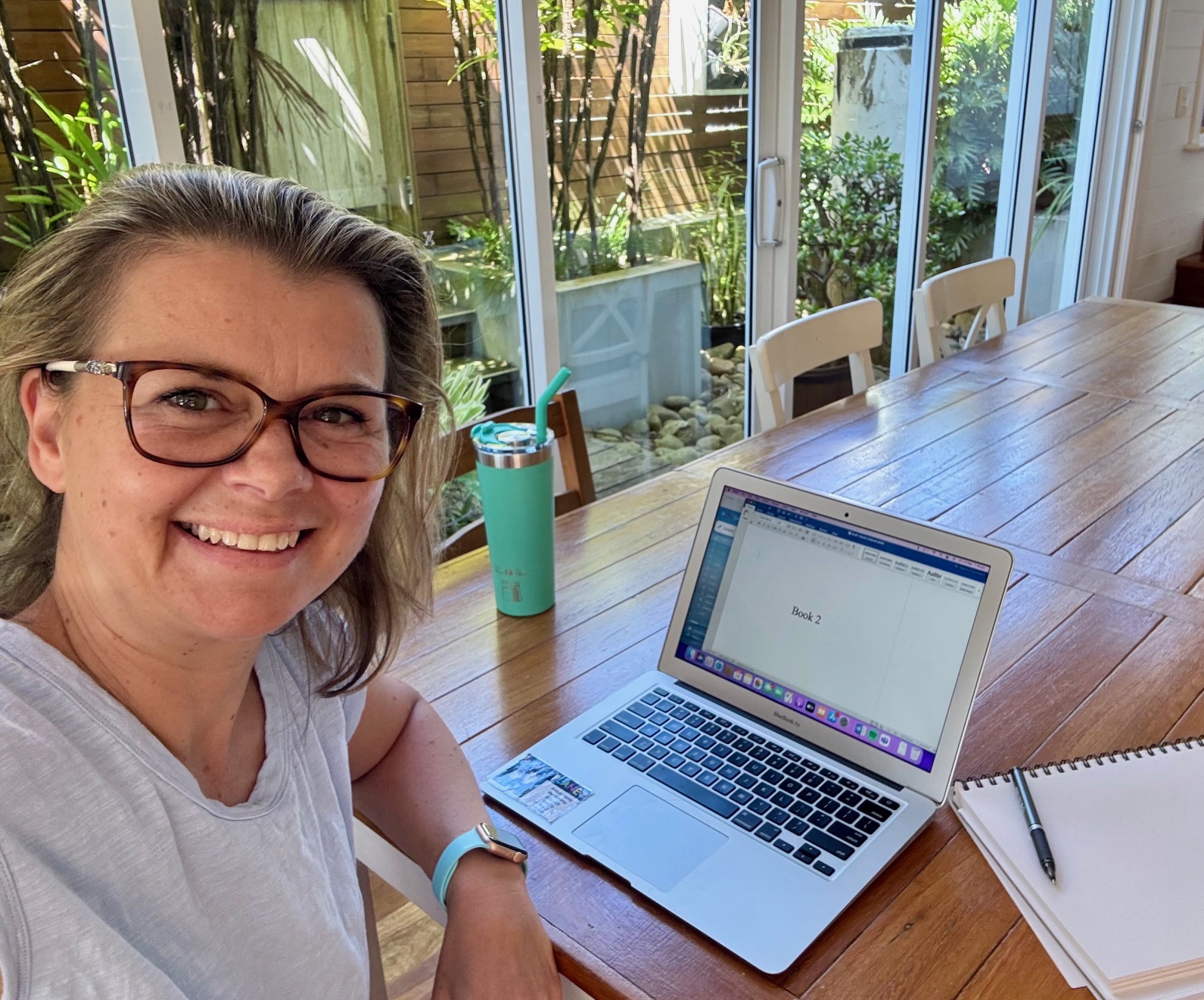
From there, Inessa moved into Write Your Novel, which she completed three times! The weekly workshopping became central to her development. “The team workshopping in Write Your Novel is wonderful. We swapped feedback every week, which did two things: kept me on deadline and gave me the lens to see what was working and not working in other people’s writing,” she says. “I could reflect on that in my own writing and the combination inspired me to keep going.”
“I met a group of talented lovely writers who I’m still friends with. I couldn’t have got where I am now without the help of these friends.”
Learning to take feedback
Ask Inessa what the most important skill she learned was, and her answer is immediate: how to take feedback. “The courses developed my ability to open my mind to that process.”
The Crime and Thriller Writing course proved invaluable for shaping her approach to the genre. “The crime courses I did were wonderful to learn about reader expectations and how to research murder,” Inessa says. “The course material gave me ideas and ways to approach a crime novel in a different way, something to differentiate my story in a crowded market.”
And Write Your Novel gave her the structural foundations she needed. “The course material is excellent to learn the nuts and bolts of traditional story structure. Plus we learnt how to construct a point of view for the main character and set the story in memorable settings which resonate with the deeper themes of the story. All amazing skills to learn.”
A broken-hearted detective and a mountain full of secrets
Devil Mountain follows broken-hearted and humiliated police detective Anastasia Brown, who is sent to a small mountain village to investigate the grisly murder of a popular GP. His body has been found burnt and chained in the state forest, with creepy symbols carved into the soles of his feet.
“Ana quickly realises she has a huge problem on her hands when her investigation hits a dead end, and strange things start happening to her,” Inessa says. “Is this the work of a clever killer with a taste for the macabre? Or could the elusive coven of witches who worship on the mountain be involved?
“It’s about female solidarity. And misogyny. But also love and healing. It has a lot of fun moments to contrast with the darkness.”
Post-its, whiteboards and chocolate-covered coffee beans
Inessa’s writing process is, by her own admission, messy and fun. “I’ve grown to love and accept the muddle of writing a book. All those long minutes spent staring at the ceiling, trying to work out how to move the story forward,” she says.
“I have a million Post-its on my desk and wall, a whiteboard covered in ideas and lists, and an A4 writing pad where I download my brain regularly, then tick off as action points.”
“I love that electric thrill when a tiny idea pops up (usually in the shower or while driving) and I grab the nearest scrap of paper to capture it.”
She sets herself goals and always rewards herself – whether it’s a Lego man, a chocolate-covered coffee bean, or a glass of wine if she hits her target. “I don’t work in terms of word counts,” she says. “I challenge myself to solve a story problem, complete a scene, introduce a new source of conflict, bring a setting to life or develop a character’s backstory.”
A quiet moment in Kyoto
 Inessa’s path to publication was paved with milestones that gradually built her confidence. Being shortlisted for the ASA/HQ Commercial Fiction Prize and runner-up for the Banjo Prize convinced her she was on track. Then she won the Varuna/Affirm Mentorship, which led to her submitting her novel to publishers.
When the news finally came, Inessa was lying in bed in a hotel in Kyoto. “I spotted the email and my hand froze and my husband’s snoring faded out,” she says. “I always thought I would squeal and rush around. But I quietly got out of bed, didn’t wake my husband and hopped in the shower. I spent probably ten minutes in there just shaking my head, quietly chanting OMG and jogging on the spot. My boys were soooo happy for me over breakfast then we celebrated by going to a Kitten Café.”
Becoming a published author was never part of the plan. “Oh my god, no,” Inessa says. “I set out to keep myself sane. Writing was a joy. Is a joy!”
Always a file open on the screen
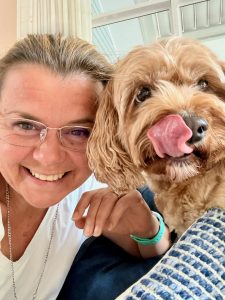
 These days, Inessa lives near Manly Beach in Sydney with her two teenage boys, her loyal assistant Billy the cavoodle, and two cats. She’s finishing the final edit of Devil Mountain while writing book two in the background and workshopping a monthly piece with her feedback group. “There’s always a file open on my screen, ready to jump back into when I next sit down,” she says.
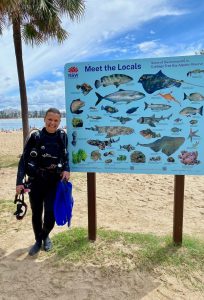
She’s also a dedicated member of the writing community, attending and volunteering at writing festivals, and recently learned to SCUBA dive to research a part of her new book. “Those tiny details are what really bring a scene to life,” she says.
Her advice for anyone considering an AWC course? “It’s a game changer. Unless you’re somehow born inherently knowing how to write, it’s time to learn. I’d highly recommend the courses with feedback – both from your tutor and other writers.”
You can follow Inessa’s writing journey on Instagram on Facebook, and at inessajackson.com.
Courses taken at Australian Writers' Centre: